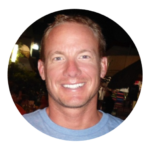
Dr. Chuck J. Rylant is a Doctor of Psychology and a Federal and State Court qualified expert witness with over 27 years of professional experience.
He has been retained in more than 250 cases and has provided testimony in jurisdictions across the United States, including Alabama, Alaska, Arizona, California, Connecticut, Florida, Minnesota, Nevada, New Hampshire, New Mexico, North Dakota, Ohio, Texas, Utah, and Washington, D.C.
Dr. Rylant’s work focuses on civilian self-defense, police use-of-force, tactics, training, de-escalation, and strangulation, including carotid restraint and vascular neck restraint techniques.
His expertise includes human factors such as memory, attention, fight-or-flight response, decision-making, and perception–reaction time, particularly as they apply to real-world encounters involving rapidly evolving, high-stress conditions.
He is a Certified Force Science Analyst and Advanced Force Science Specialist and has been designated by California Peace Officer Standards and Training (P.O.S.T.) as a use-of-force subject matter expert. In that role, he participated in drafting police training standards that were subsequently adopted into law.
Dr. Rylant is a retired police officer and detective, former S.W.A.T. member, and P.O.S.T.-certified instructor in firearms, baton, chemical agents, Taser, and arrest and control (ARCON). He is a former police academy lead instructor in ARCON and use-of-force and continues to train both civilians and law enforcement personnel.
He is the author of Shots Fired: The Psychology Behind Officer-Involved Shootings and Police Use of Force Decisions: Psychological and Physiological Factors Affecting Performance Under Pressure and is a Brazilian jiu-jitsu second-degree black belt.
Areas of expertise:
- Civilian self-defense
- Law enforcement use of force
- Arrest and control (ARCON)
- Deadly force encounters
- Strangulation / carotid restraint
- Fight or flight response
- Decision making under stress
- Firearm attacks
- Knife attacks
Some of Dr. Rylant’s qualifications include:
- Court qualified use of force expert witness
- P.O.S.T. academy use of force instructor
- P.O.S.T. academy ARCON instructor
- P.O.S.T. certified firearms instructor
- Brazilian Jiu-Jitsu black belt
- Master L.A.P.D. Arrest & Control instructor
- Advance Force Science Specialist
- Certified Force Science Analysist
- #1 best selling author of Shots Fired: The Psychology Behind Officer Involved Shootings
- California P.O.S.T. advanced certificate
- Former SWAT member
Scope of Practice
Dr. Rylant does not provide clinical services, patient treatment, or forensic psychological evaluations. His work is limited to civilian self-defense, law enforcement use-of-force analysis, and human factors as they relate to perception, attention, decision-making, and performance under stress.
This specialization is grounded in his combined experience in law enforcement, training, and applied human performance, and focuses on the evaluation of real-world decision-making in rapidly evolving, high-stress encounters.
Download professional CV here
Download Fee Schedule here
Contact Dr. Rylant here
Books by Dr. Rylant here